
Guide • Survival Japanese
Survival Japanese for your first week living in Tokyo
The first week in Tokyo is exciting and overwhelming: new apartment, new station, new systems for everything from trash to phone plans. You don’t need fluent Japanese, but a few survival phrases will make things feel much more manageable.
This guide focuses on simple, polite Japanese you can use at the ward office, phone shop, and convenience stores near your new home — plus how TabiTalk can act as your “first week” companion app.
The situation
In your first week you’ll probably register your address, sort out health insurance, get a phone plan, and start learning your local station. Most of the people you deal with will be patient, but they may not be comfortable in English.
Your goals are simple: say who you are, explain that your Japanese isn’t strong yet, and ask politely for help or confirmation. The phrases below are designed to be reused in lots of places, not just Tokyo.
Key Japanese phrases
These are “Swiss army knife” phrases you can use again and again in different offices and shops.
“My Japanese is not very good yet.”
nihongo wa mada amari jōzu ja nai desu. 日本語はまだあまり上手じゃないです。
This sets expectations in a friendly way. It tells the other person you’re trying, but they should speak slowly or use simple words. You can follow it with “Eigo wa daijōbu desu ka?” if you want to ask if English is okay.
“Could you please speak a little more slowly?”
mō sukoshi yukkuri hanashite kudasai. もう少しゆっくり話してください。
Use this when you understand some words but the speed is too fast. It’s polite and very normal to ask; people will usually adjust right away.
“I’ve just moved here.”
saikin koko ni hikkoshite kimashita. 最近ここに引っ越してきました。
Helpful at the ward office, bank, or with neighbours. It gives context for why you might not know local systems yet, and often leads to extra guidance and printed information.
“I’d like to register my address.”
jūminhyō no todoke o shitai desu. 住民票の届けをしたいです。
At the ward office, this tells staff you’re here for resident registration. Even if they don’t catch every word, jūminhyō (resident record) is a strong keyword that gets you to the right counter.
“I’d like a phone plan with data.”
dēta tsuki no keitai puran o onegai shimasu. データ付きの携帯プランをお願いします。
Use this at a mobile shop or electronics store. Point to a plan on the pamphlet while you say it. Dēta tsuki means “with data”, and keitai puran is “phone plan” in easy loanwords.
“Which train do I take to get to ____?”
____ ni iku densha wa dore desu ka? __に行く電車はどれですか?
At the station, insert your destination (for example, Shinjuku or Shibuya) into the blank. You can show the station name on your phone while asking. Staff may answer by pointing to a platform or line.
See it in TabiTalk, a Japanese learning app for everyday life in Japan.
TabiTalk has scenarios for ward offices, phone shops, and station help that mirror many of these first-week moments, so you can rehearse them in a calm environment before doing them in real life.
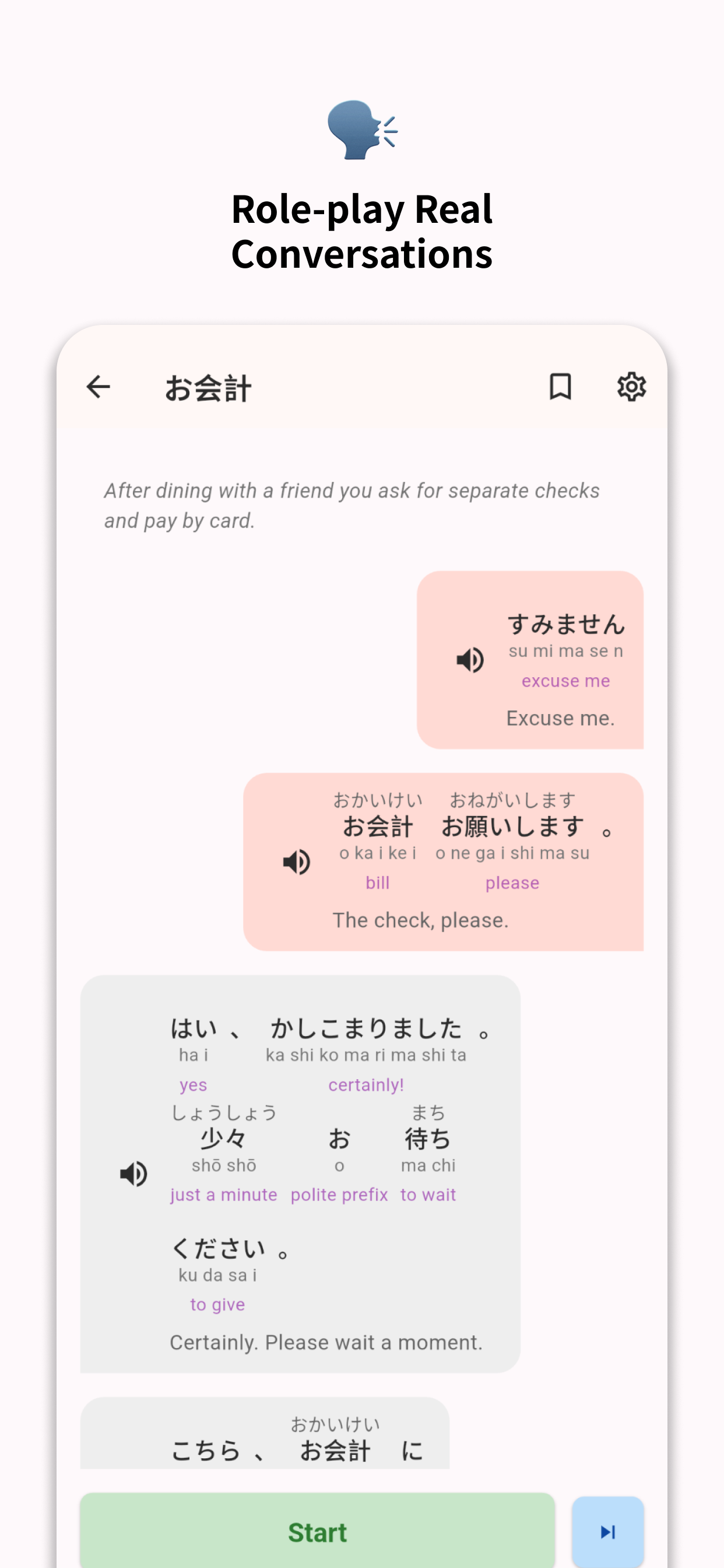
Practise this (and more) in the app
If this is exactly what you need, TabiTalk gives you interactive drills and camera help for this and more.
For a bigger-picture look at using TabiTalk as your Japanese learning app for life in Japan — including how it helps with everyday resident situations beyond the first week — you can read the full hub guide next.
You can:
- Save important first-week phrases so they’re one tap away at the ward office or phone shop.
- Tap anything you don’t recognise to see “What does this mean in Japanese?” with simple explanations.
- Use the camera to check mail, flyers, and notices that arrive at your new address.
Install TabiTalk on iOS or Android and take it with you for your first week — and first year — living in Tokyo.